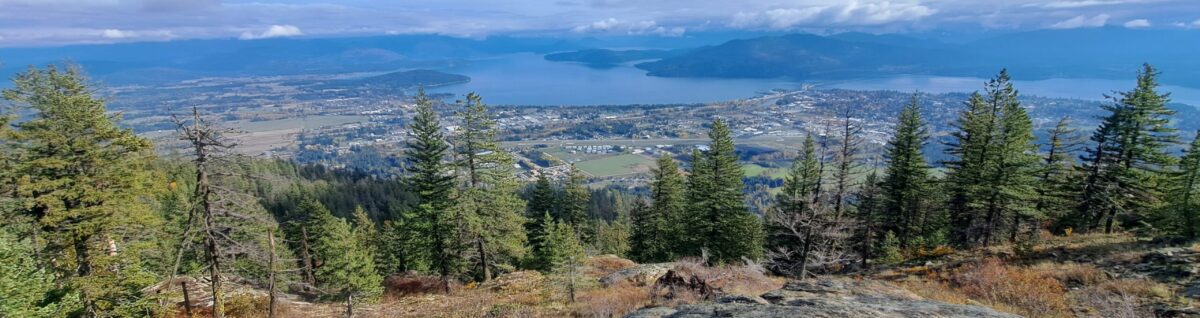
Palouse Cascade Trail, Rock Lake and Pine Creek, a return trip.

Today I repeated an adventure from last summer. The hike from Hole in the Ground Road to the end of the trail is relatively short but extremely scenic. Best of all being an old railroad grade it is flat.

Less than a mile from the starting point is a bridge over Pine Creek and the site of a derailment before the rail line was abandoned. Two old rail cars were left here as they were too damaged to repair and moving them would have cost money. The Palouse Cascade Trail crosses Washington State from the Idaho line to the outskirts of Seattle. The trail is the Washington portion of a former transcontinental railroad known as the Milwaukee Road.

The trail follows Pine Creek from Rosalia to Rock Lake. Along the way it joins with the creek that drains Bonnie Lake, Rock Lake’s sister to the north with which it shares a canyon, the aptly named Hole in the Ground.

About two miles in we came to this old railroad tunnel. The tunnel is in excellent shape and you can get through it without using flash lights, barely.

This is the first of two tunnels along this stretch of the trail. The second is beyond the point the trail is closed. I have hiked through it many years ago before the state closed off the bridge that accessed it. The second tunnel is in much worse shape and I remember having to climb over rock fall at the far end of it.

Not long after the tunnel Rock Lake comes into view. The views of the lake steadily improve the further you push on. The far side of the canyon the lake is in is very impressive with multiple benches shaped by multiple catastrophic flood events clearly visible.

At this point the trail is hundreds of feet above the lake. Rock Lake is the largest natural lake in Eastern Washington.

The landscape the trail passes through dominated by basalt cliffs. The primary vegetation consists of open Ponderosa pine forests.

Rock Lake is a fascinating body of water. In places it is over four hundred feet deep and surrounded by shear cliffs. Boaters are strongly cautioned as it it subjected to strong winds, submerged rock pinnacles and has almost no safe landing places along the shoreline.

Just before the trail is blocked off at three and a half miles in you will be treated to awesome views of the north half of the lake.

At this bridge the trail is blocked by a chain-link fence and is well posted. The decking on this bridge is extremely rotten and the funds to rebuild it are simply not available at this time. Not too far around the bend is the second tunnel which would require extensive work to make it safe for trail users. A shorter section of the trail starting on the south end of the lake is likewise blocked by a deteriorating bridge. Additionally a section of the rail easement between these two closed bridges has reverted back to private ownership and is closed for public use.

This is one of my favorite easy hikes in Eastern Washington. The round trip is only seven miles and the grade is flat. Trail users are asked to register with Washington State Parks as the trail has extremely remote sections and no amenities. You can do so here. On this day we passed five other folks enjoying this slice of Free State America.

East from the crossing with Hole in the Ground Road, the trail continues to Malden and eventually Rosalia. Between Malden and here, several old rail bridges are still closed due to the damage they suffered from s wildfire five years ago.

The Ferry County Rail Trail near Republic Washington.

I made a three day road trip to the small town of Republic in the middle of the Okanogon Highlands, a mountainous area in North Central Washington. The highlight of this trip was that I finally got to ride much of the Ferry County Rail Trail.

There are a couple of ways to get to Republic from Post Falls Idaho. One of them involves driving north from Spokane and then crossing over the five thousand foot Sherman Pass. I took the other route. North of the town of Wilber, the State of Washington operates a ferry across Lake Roosevelt. This service is free and was an interesting way to start my adventure.

After crossing the lake the first few miles of the trip ran next to the Sanpoil Arm of the lake. It was a scenic fifty plus miles from the ferry landing to Republic.

After checking into my hotel I immediately drove the ten miles or so to the Herron Creek Road trailhead which is the start of a particularly scenic section of the Ferry County Rail Trail.

Within the first mile. the trail guided me to the south end of Lake Curlew.

For the next four and a half miles the trail was mostly right next to the lake.

At places where the trail strayed inland away from the lake shore, pretty countryside and mountain views were the norm. I even got to cross this little bridge over a stream that fed the lake.

Lake Curlew is a popular recreational area ringed with hundreds of vacation cabins. The lake is a couple of hundred feet deep and hosts numerous islands.

The surface of the trail is made of crushed compacted gravel and is about the best non-paved surface I’ve ever ridden on.

Even the non lake views are pretty spectacular. The Okanogons are a beautiful if little known outside of the immediate area mountain range. Being sandwiched between the Northern Cascades and the Selkirks will do that.

Around one more bend I caught a glimpse of my destination, a trestle bridge over the north end of the lake.

The bridge is one of the highlights of the trail. The acquisition and improvements to this trail have been a grass roots effort. Ferry County is an extremely rural area and much of the work has been done by volunteers and through grants and donations.

The views of the lake looking south from the trestle were beautiful.

When I crossed the trestle and arrived at what I thought was the end of the improved, or ridable section of the trail, I was pleasantly surprised to see that they were working on completing the graveling of the trail to the community of Curlew ten miles away where a second improved section has already been completed.

The return trip was just as pretty but from another perspective.

After an eleven mile leisurely ride, I was back to the trailhead and as time was getting short, I headed into town for my reward.

Republic, in addition to having an awesome name for a town featured in the Free State America blog, is a great little place to stay during trips to the Okanogans. Across the street was the Republic Brewing Company, a great place to relax and enjoy the products. Behind me was the Knotty Pine Restaurant where I got just about the best cheese steak I’ve ever had.

Bright and early the next day I drove to the trailhead on the edge of Curlew to ride another section of the trail.

This trail gets you out in the countryside in a hurry. As with the section along Lake Curlew, this part of the trail had an excellent surface and I could have easily ridden it on my hybrid.

The trail follows the Kettle River downstream towards Canada. Lightly traveled State Road 21 is on the opposite side but you rarely even hear traffic from it.

About three miles in you come to one of the highlights of this section of the trail, an old tunnel.

It is one of the shortest railroad tunnels I’ve ever gone through.

Looking back after passing through the tunnel was also a nice view.

Beyond the tunnel the trail seemed even more remote and appeared to get less use. Despite the grasses growing on the trail, the surface was still excellent for bicycling.

The river views kept coming. The Kettle River starts in Canada, flows south into Washington, then heads back into Canada for a while before once again heading south into Washington before it finally empties into the Columbia River.

In addition to deer and rock chucks “marmots” I did get to see a couple of moose crossing the trail. I missed the first and got this poor quality photo of the trailer.

I turned around near a place called Lone Ranch Creek about three miles short of the end of the trail and the Canadian border. I thought this little bridge could have used guardrails.

The views on the way back were just as nice as the ones on the way out.

The Kettle River Valley in Washington is a beautiful place.

And I got to go through the tunnel once more.

After about eighteen miles of some of the prettiest bike riding I ever done, I was back in Curlew.

After a brief stop at Lake Curlew State Park on my way back to Republic to grab lunch, I decided to take one more short bike ride.

On the same abandoned railroad line a second trail called the Golden Tiger trail connects Lake Curlew to Republic. I’m not sure why this section has a different name. The first few miles from Herron Creek Road towards Republic are unimproved and used primarily by ATV’s.

Heading towards Republic, the final two miles of the trail are paved and there is a trailhead at each end of this paved section.

Here the trail is located fairly high above the valley providing some pretty awesome views to the south.

Despite being very short, the paved section of the Golden Tiger Trail has some of the best views off of a bike trail I’ve seen.

I completed the four mile round trip and called it a day, at least as far as bicycling went.

After three short rides over two days I figured I got in about thirty three miles and saw much of the trail. I can’t say enough positive things about this trail and highly recommend that if anyone gets the chance, they should head out to Republic and check it out. Lake Curlew looks like a gem for kayaking too and Sherman Pass has some highly rated hiking. Until next time.

After a good nights rest at the Northern Inn I took my time driving home via Sherman Pass and Colville. It was a good road trip.

Hiking the Palouse Cascade Trail along the south end of Rock Lake.

The three mile section of the Palouse Cascade Trail from just east of the boat ramp on the south end of the lake to the point were it is closed to the public at an old railroad trestle is about three miles. As this section of the trail is a dead end it is seldom visited by cyclist or hikers. I decided to check it out anyway.

The old easement for the Milwaukee Railroad crosses Rock Lake Road about three miles north of the tiny village of Ewan. A section of the old rail bed south of Rock lake Road reverted to private ownership and is closed to the public. At the old railroad crossing there really isn’t anyplace to park so I settled for a gravel road shoulder just wide enough to get my car off the pavement.

From the road, a steep incline got me up to the second of two gates. For gate combos and trail rules go to the official site and register there. There must have been a bridge or an embankment here when the railroad was active. Now an abrupt cliff on the south side of the road leads to the old railbed that is now closed to the public.

Near the beginning of the hike the trail passes by Lavista Lake, a small body of water just east of Rock lake itself.

Washington State Parks places these markers so you know how far west of Chicago you are. They do correspond with the original markers used by the railroad.

Along the old railroad bed many of the old telegraph posts complete with some of the wires and glass insulators line the route. It’s nice to see a little bit of railroad history.

Less than a mile in I came to gate number three. Apparently this one stays open all the time.

The trail from here on followed the shore line of Rock Lake. Last year I hiked a section of the trail on the north end of the lake to the point is was closed to the public. Here is the post of that adventure.

For most of the route in addition to the lake on one side of the trail. The opposite side was flanked by relatively steep and impressive bluffs.

While researching Rock Lake I came across stories about lost rail cars full of Model T cars, stories about a lake monster and warnings about submerged rocks that have ripped the bottom off of boats piloted by the unwary. I wondered if these could be them.

Rock Lake sits right at the boundary between the Palouse Prairie and the Channeled Scablands. It is dry here and most of the trees are Ponderosa pines, an extremely drought tolerant species.

At three miles in I came to my turn around point. Another mile or so down the line another section has reverted to private ownership and is closed off anyway.

I held my camera above the chain-link to get a photo of the old bridge. I have to go with Washington on this one. I’ve walked across some sketchy railroad bridges before but I wouldn’t cross this one even if it wasn’t blocked off.

From the end of the trail there is a nice view of the lake. Rock Lake is the largest natural lake in eastern Washington at over two thousand acres in size. It is also very deep, over a hundred feet deep almost everywhere and over three hundred in places.

I took one last look at the old bridge and began my return trip. The supporting structure of the bridge looked okay to me but the deck was rotted almost down to sawdust.

As far as wildlife goes I saw plenty of deer and turkeys but they didn’t let me get close enough for decent photographs. That’s fine as I know what they look like anyway.

It is lonely country out here. I saw not a single other person on my six mile hike except for some fishermen in boats out on the lake.

This is the fourth trip I’ve made to hike or bike a section of the Palouse Cascade Trail. I find the old railroad history is fascinating. I’ve ridden the sections west of Tekoa and west of Rosalia on previous occasions.

The Milwaukee Road was once transcontinental railroad. It was the last one of the five completed and the first and so far only one to be abandoned. Other sections of the railroad are now used as trails like the Olympian in Montana and the Hiawatha in Idaho.

Four hours and six miles later I was back to where I started. I was relieved to find my car still intact on the side of the road.

Biking the Milwaukee Road along the St. Joe River

Over the past year I have explored several sections of America’s only abandoned transcontinental railroad. Parts of the Milwaukee Road have been converted in to bike trails, parts have been lost to time and some sections are now public roadways. Forty plus miles of the old railbed between St. Maries and Avery along the St. Joe River in Idaho is the latter. Today I checked out a ten mike stretch between Marble Creek and Calder along with checking out a couple of historic sites.

Before my ride I drove all the way to Avery, 48 miles up the road to visit the old depot in that town.

Next to the historic depot there is a restored railcar from the glory days of the railroads passenger service when the Hiawatha, for which the famous bike trail is named, ran from Chicago to Seattle. This is a lounge car.

From Avery to Marble Creek, the old railbed is now a paved road with a fifty-five mile per hour speed limit, no shoulders and plenty of logging truck traffic. I opted to drive back thirteen miles to the bridge at Marble Creek. A sign let me know that I might not make it to Calder from here.

At Marble Creek a gravel road splits off from the main highway just before the paved road crosses the St. Joe River. From this point the railbed has been turned into a lightly used local road. Pretty much the only development along this ten mile stretch is vacation properties on the river bank and the old railroad is how they are accessed.

At the Goat Rock Cut, I was treated to an exceptional view of the river.

I saw a lot more drift boats floating down the river than I did vehicles on the railbed. This seems to be a very popular stretch of water for fishermen to enjoy this pastime.

Several small bridges crossing small side creeks graced the old railbed. It appeared the wooden structures dated from the days this was an active rail line.

The bridges have been planked to support vehicle traffic but the condition of the surface varied. I walked my bike across a couple of them so as to not taking a chance on bending a rim of hitting a protruding nail.

About four and a half miles in I came across the only tunnel on this stretch of the old railroad. It was short and straight.

The local roadway was surprisingly wide being a former railroad. I’m guessing some sections used to be double tracked.

This is the Big Creek Bridge.

The road surface was okay for fat tired bikes with only a few short sections of loose gravel. That being said it’s still a lot harder pedaling on gravel than it is on pavement.

Seven and a half miles in I came across a construction site. Here is where they’re replacing the Elk Creek Bridge and here is where I turned around. I didn’t see a sign that said bridge closed except for bicycles.

They are a lot of views of the St. Joe River along the road.

The St. Joe River is a popular draw for all kinds of outdoor enthusiast.

I made it back to my car and drove around the detour to Calder, the only town of any kind between Avery and St. Maries. They do have a small store but I found out it is closed on Mondays. Calder is across the river from the main highway and is accessed by it’s own narrow bridge.

I got back on my bike and pedaled west to a closed bridge. The railroad was obviously double tracked here. I have read reviews where the riders have dismounted and carried their bikes across. I did not. The old railbed on the far side was completely weed covered anyway.

Seven miles west of Calder the main road again crossed the St. Joe and so did the old railbed. I had to check out this impressive bridge before calling it a day. I drove a couple of miles east back towards Calder also but the road surface there was extremely rough.

I always wanted to check out this section of the Milwaukee Road on bike but truth be told the view would have been the same from inside my car. I’ve ridden and walked several sections of the Palouse Cascade Trail which is Washington State’s section of the old rail line.

Next time I’ll ride the forest service road from the lower end of the Hiawatha Trail at Pearson to Avery. I did that years ago and remember it as being very scenic.

The Columbia Plateau Trail, Amber Lake and an impressive embankment.

For todays hike, I headed an hour or so through and past Spokane to check out the Columbia Plateau Trail, specifically the section from the Amber Lake trailhead towards the north.

Last year I took a short hike on the Columbia Plateau Trail from the end of the pavement outside of Cheney Washington into the Turnbull National Wildlife Refuge. At the time I felt like I didn’t have enough photos or information on this trail to make a post. The unpaved part of the trail started at a trailhead off of Cheney Spangle Road.

The first mile of the trail passes through farm and ranch land before crossing under Cheney Plaza Road and entering the wildlife refuge.

Turnbull Wildlife Refuge is about 23,000 acres and covers a portion of the channeled scablands, a geological area in Eastern Washington created by ice age floods that stripped the soil away and left numerous narrow lakes in coulees. The section I hiked passed by several small lakes and through low cuts blasted through the basalt.

In the area excavated I notice this striking radial design around a small hole. Once you see one of these, you can’t un-see them. These were created by blasting the rocks so the basalt could be more easily removed. Once I saw it, I noticed dozens more through out the cuts.

This line, The Spokane Portland and Seattle was built in 1905 and operated for eighty plus years. The 130 miles between Spokane and Pasco are now owned by the State of Washington and maintained as a public trail.

That was last summer. Today I was looking for a place for a winter hike with limited or no snow and open scenery so I could stay in the sunshine, so I decided to check out another section of this trail.

It took me over a hour to drive to the Amber Lake Trailhead. All of the trailheads require the Discover Pass to use so I used mine. In addition to providing access to the trail there is also a place to launch kayaks or canoes on this pretty little lake.

Like most lakes in the Channeled Scablands, Amber Lake is long and narrow and oriented from the northeast to the southwest in the direction the ancient flood waters presumably flowed. Being late January the lake as to be expected was iced over.

Near the northeast end of the lake, the old railroad bed ran through a cut right next to it.

Soil and rock from the cut was used to create an embankment along part of the lake shore.

Beyond Amber Lake the rail bed curved towards another of these cuts through the basalt. Scattered Ponderosa Pines were the dominate tree species along the trail.

That and birch trees. What looked like frost was actually the last of Decembers snow that had not yet melted in the shade of the rock walls.

Around a bend was a tunnel, kind of. This is a recent addition to avoid crossing one of the only paved roadways in the area, Mullinex Road.

Even in a newer and very remote tunnel, the lowlife vandals have been hard at work degrading the experience for everyone. Thanks scumbags! Even though it wasn’t an original railroad tunnel it was still kind of neat to walk through.

Past the tunnel the cuts through the basalt got a little bigger. You have to be impressed with the work it took to make this railroad a hundred and twenty years ago.

This rock wall shows how the cooling lava created basalt columns. A patch of ice at the bottom is a seepage of ground water.

Between the cuts through the basalt the trail passed by numerous small ponds all frozen.

Beyond the trials crossing with Stirling Road the old railbed ran on top of a small embankment between wetlands. This is were I called it good and turned around.

Once back at the parking lot I took a short walk to get a good look at the part of the lake southwest of the trailhead. I decided to make one more detour before I made the drive home.

Just seven miles or so southeast the Columbia Plateau Trail kind of ends at Williams Lake Road just inside Lincoln County. I’ve always found the correlation between trees and the Spokane County line kind of interesting. Spokane County gets drier the further east you head but has Ponderosa Pines right up to the county line. As soon as you cross into Lincoln or Adams counties there are almost no trees.

South of Lake Williams Road the trail reverts to a rough surface of old railroad ballast and isn’t really suitable for even fat tired bikes. In fact its kind of hard to walk on. Only real adventures explore the eighty mile long section from here to Franklin County. Also I understand that several road crossings and high trestle bridges are closed and their are no practical detours around them.

However just across the road from the trailhead there was this epic piece of early twentieth century engineering. This was the largest railroad embankment I’ve ever came across and I couldn’t resist checking it out.

It was well over a mile across a coulee I couldn’t find the name of on this massive earthen berm. It is difficult to impart the scale of this marvel. Quick math gave me a ball park guess that upwards of half a million cubic yards of rock and dirt were used to create it.

Halfway across I could see the barren terraces were I’m guessing all of this fill came from over a hundred and twenty years ago. I’m guessing this embankment was over seventy feet above the coulee floor and tapered from thirty feet wide at the top to well over a hundred feet wide at the bottom.

Looking up the coulee I could see Down Lake with Mica Peak Washington in the far distance almost forty miles away.

After forty five minutes I made it to the other side of the coulee. Now there was nothing left to do but return to the trailhead. The sun was getting pretty low on the horizon and the scablands are lonely country.

I took a last look at this giant causeway and called it a day. I would call both the section of the trail southeast of Amber Lake and the massive embankment hidden gems in the Inland Northwest. It is an epic landscape indeed.

Exploring old abandoned railroads is one of my favorite things to do. This rail trail eventually crosses over the Palouse Cascade Trail anther thirty miles or so to the southwest. I guess I have more places to check out next spring.

The Olympian Trail, from Taft to Saltese and back.

I headed across Lookout Pass into Montana. I wasn’t sure where I was going to bike, but ended up at the East Portal Trailhead, the place 95% of visitors who ride the Hiawatha start their journey. I usually avoid the Hiawatha on summer weekends due to the crowds involved, and with good reason.

This was the sight that greeted me in the parking lot. That sealed the deal. Luckily for me another trail on the same railroad easement heads east from this same trailhead into Montana. I went that way and everyone else went through the tunnel into Idaho.

Immediately I was alone. The trail surface was just about the best and smoothest ride I ever had on an unpaved rail trail. The Olympian is another section of the Milwaukee Railroad, one of five transcontinental railroads and the only one that has been abandoned.

Heading east you are also heading down from the lines high point at the Taft Tunnel. The surface and grade are such that as grown man with fully inflated tires I had to ride the brakes a little. That made it fun going out but there’s always a price to pay on the return.

A mile or two in and I found myself high above Interstate 90. One of the only downsides of this ride is that you can hear the traffic below you for a large part of the trip. In most places the forest is thick enough to conceal the highway and it is so far below the trail as to not be a distraction.

About three miles in while descending using a loop on a side canyon I came across the Dominion Tunnel, the only one on this stretch of the trail. The Hiawatha has several. I only needed one to be happy.

The tunnel was well made and maintained. It had a slight bend but was short enough that there was no need for flash lights.

Immediately after the tunnel is the Dominion Bridge, a high trestle over a creek that rivals any of the bridges on the Hiawatha.

The views were awesome and more importantly I had the view to myself. On the Hiawatha every bridge is a circus on busy weekends with dozens of people jockeying to get that perfect shot of the family. I only had to work around my bike.

I lingered to enjoy the view and solitude. At this point of the trail it sweeps far up the side canyon from the Interstate so there is no traffic noise and all you can see is the wilderness you are traveling through.

Just pass the bridge the trail is gated making this a pedestrian or bicycling only experience. Beyond this point the railroad bed is open for recreational traffic. I had maybe seven side by side ATV’s pass me on the rest of the trip, mostly close to Saltese.

The trail now heads back down the side canyon and within another mile you are again high above Interstate 90. There are nice views of the Bitterroot Mountains along the way.

Just before I made it to Saltese, a tiny Montana town, I came across this sign. I kept riding on the high grade but soon the trail surface became much rougher. It looked like from here on that the railroad was mostly used by ATV’s and dirt bikes.

I ended up walking my bike the last quarter mile or so to the Saltese high bridge which was my goal for todays ride. I didn’t want to take a chance on a bent rim since I needed my bike to carry me back up eight and a half miles to the trailhead.

From the deck of this bridge you could see pretty much all of Saltese. The community does have one of those roadside casinos found through out Montana so I guess you could take the connection to the lower grade to get a cold beverage if you wanted. As you can see in the photo by now the trail isn’t that much higher than the interstate. From what I can tell within a couple of more miles they are at the same level.

This is what the bridge looks like from below. To get to the East Portal Trailhead I had to take a detour through this town due to road construction That added ten miles to the drive but gave me the opportunity to see this bridge from below without having to ride down the side trail.

On the way back up I had more time to appreciate the scenery. Going up hill wasn’t that bad. I just put it in low gear and accepted that I was only going to make single digits as far as my miles per hour.

I didn’t run it a lot in the way of wildlife. Since I was the only cyclist on the trail the entire time I had high hopes for some animal action. I had to settle for a harmless snake.

On the way back I stopped at the Dominion Bridge again and spent a good half hour comptenplating the views. If I had a lawn chair and some cold drinks I would have stayed the rest of the afternoon. It was unbelievable to have this place to myself.

Beyond the bridge and tunnel I could make out the railroad grade across the side canyon I had recently biked up. It was a scaled down version of looking across Loop Creek on the Hiawatha.

Just before I made it back to East Portal and the crowds I had a feeling I was being watched so I stopped and returned the favor.

By the time I made it back to the trailhead for the Hiawatha folks had started parking beyond the lot on both sides of the old easement. It had to be a zoo on the Hiawatha that day. I felt like to smartest person in the room having enjoyed a scenic seventeen mile long bike ride in complete solitude while everyone else had to battle the crowds.

So the Olympian Trail continues down hill another twenty miles or so to St. Regis. I’ve seen parts of it from the Interstate during my travels and it appears to stay down on the valley floor beyond Saltese. I have no idea what the surface and use conflicts are like, but the first eight and a half miles from East Portal are wonderful. It would be nice if they had a trailhead just beyond Saltese and an improved surface over the Saltese bridge.

The Palouse Cascade Trail part 3, biking west from Rosalia.

For my third trip this summer on the Palouse Cascade Trail, I headed west from Rosalia with the goal of making it to Malden. I fell short by a couple of miles. Better to enjoy a sixteen mile round trip than have a miserable twenty miler. Part 1 is under the hiking category as that is how I traveled it.

Rosalia is a small farming town on US-195 about thirty-five miles south of Spokane. The Palouse Cascade Trail crosses the old highway just south of Rosalia on this amazing concrete arch bridge. This bridge is a local landmark and still has the Milwaukee Railroad logo painted on it.

In addition to the old highway, this bridge crossed Pine Creek , a small stream the trail follows all the way to Rock Lake. The new US-195 crosses over the railroad easement just to the east. Rosalia is about twenty miles west of Tekoa, the town I used as my base for my last trip on the trail. The level of engineering used on the bridges give a hint that this was once one of the five transcontinental railroads in the United States.

The trail is a little hard to access from the town. Rosalia does have a small park with restrooms, but the trail is located up a steep slope from the town off of rough gravel roads. Within the first mile, a steep detour bypasses a place where an old bridge was removed over Gashouse Road. This intersection is the only thing resembling a trailhead in the area.

At the intersection their is an interpretive sign. The trail surface alternates between rough gravel ballast and soft sand. I heard the surface is far more challenging west of Rock Lake and Ewan.

The first couple of miles out of Rosalia parallels US-195 and passes though a typical mix of farmland and basalt cuts as it heads north and then northwest.

The trail passes a cemetery just outside of town. There’s one off the trail just east of Tekoa as well.

At Babb Road, the trail passes under the roadway in a newer culvert. I don’t think a train would fit through it. I’m not sure if this “tunnel” replaced a taller bridge or if the road just didn’t go through before the railroad was abandoned.

Evidence of a catastrophic wildfire from a few years ago was evident along the trail. This fire burned down much of the town of Malden and three or four bridges between that town and Pine City. Here I ran into the only other person I saw. This gentleman was nearing the end of a multiday journey that started in Cedar Falls over two hundred miles away. I was impresses. I made it sixteen and was tired by the time I finished.

Here is the first of several bridges over Pine Creek west of Rosalia. It was an impressive piece of engineering.

After the bridge, the trail passed through a couple of impressive cuts trough the basalt.

There are still old telegraph posts along the trail, some of which still had the old glass insulators. This was close to my turnaround point. I was still short of Malden by a couple of miles and the next bridge over Pine Creek was just around the bend. Sometimes a man has to know his limitations.

I saw a couple of coyotes and these white tail deer. Other than that my wildlife was limited to birds.

Most of the route of this trail is bordered by either farmland or cattle ranches. There were a few pieces of abandoned machinery along the way.

The trail passes through open range areas with gates that are the responsibility of the trail user to open and close. The State of Washington requires trail users to register on line so that they understand the rules. This process is simple and can be found here. The bovines did yield the right-of-way to me without argument.

On the way back to Rosalia I took a brief detour off trail to get a different preceptive of the bridge over Pine Creek.

When I got back to Rosalia, I ran into the same fella that I talked to on my way outbound. He was camping at the local park and we shared a couple of beers and traded stories about riding bicycle trails. Not a bad way to finish the trip.

An hour later I was back home after navigating rush hour traffic through Spokane. Between this ride and my two previous trips on the Palouse Cascade Trail I think I’ve seen most of it though eastern Washington. I would really like to explore the section through the Cascade Mountains closer to Seattle. I understand that part is beautiful and more user friendly. That might have to wait until next year.

The Palouse Cascades Trail part 2, Biking from Tekoa to Seabury and back.

Yesterday I tool a sixteen mile trip on a section of the Palouse Cascades Trail on my old trusty mountain bike.

I started my trip in the small town of Tekoa. It is one of the nicer towns in the Palouse and has several historic buildings including this old art deco movie theater. Across the street is a small park with a public restroom, a rare amenity out here in farm country.

The landmark Tekoa trestle dominates the local landscape. This 976 foot long and 125 foot high structure carried the transcontinental Milwaukee Road rail line over Hangman Creek, State Road 27 and another old railroad easement.

There is a trailhead off Washington Street on the east side of the trestle with interpretive signage and a picnic table. This trail is managed as a Washington State Park and extends from the Idaho state line almost to the Seattle area.

From the trestle there is a view of the town looking up Hangman Creek. In the background is Liberty Butte, one of several large hills embedded in the middle of an expanse of wheat fields.

The trail winds through miles of agricultural land alternating between cuts through the hills and embankments between them.

About three miles in you come to Lone Pine. There are the remains of an old grain loading facility here and not much else.

Wheat is the main crop here and in places they cultivate it right to the edge of the trail bed. About eighty percent of the fields I rode by were already harvested but some were still waiting for the combines.

Tekoa is in Whitman County which bills itself as the largest wheat producing county in the United States.

Amber waves as far as the eye can see. From the trail you get to see scattered farm buildings and spacious skies.

I crossed under one old bridge. The trail surface varied from rough ballast to fresh gravel and some areas of dried compacted dirt. I don’t usually ride on gravel and going sixteen miles on it was like riding forty on pavement.

I came across two places where small bridges had been removed and the state build a bypass trail.

Just before my turn around place, I arrived at the historic Seabury Bridge. I walked the bike across as some of the gaps in the decking could easily catch a bicycle tire and eight miles is a long way to walk back. There is a lot of useful information about the trail on the home page for the Palouse Cascade Trail Coalition, a non-profit group dedicated to supporting improvements to the trail.

The Seabury Bridge crossed over another railroad which is now also abandoned. Here you can see the cut of the Spokane Inland Empire branch that at one time extended all the way to Lewiston.

Here is the best view I could get of this impressive structure. It’s long way down to the bottom and the land down there is privately owned.

So here was the end of my ride. Washington State Parks put up these mile markers at the same spots the railroad at one time had them. They show the distance from the start of the railroad in Chicago.

The way back was pretty but I did have to deal with a decent head wind. Winds on the Palouse are usually out of the southwest or west. Today it was out of the northeast.

It was a relief to make it back to Tekoa. That’s Tekoa Mountain in the background looking northeast from the deck of the trestle.

The 287 mile long trail almost spans Washington. Through Eastern Washington it is lightly used. I was the only one on it for all sixteen miles. Earlier this summer I had hiked the section along Pine Creek and Rock Lake. This was the first time I rode part of it. Next time I’ll bring a couple of replacement inner tubes just in case.

The Latah Trail

I drove down to Moscow Idaho to ride the Latah Trail and the extension through Troy down Bear Creek Canyon.

The Latah Trail starts right at the edge of Moscow Idaho the home of the University of Idaho. A bike trail continues west through Moscow and on to Pullman Washington. Both towns are in the area known as the Palouse Prairie, one of the premier wheat growing regions in America.

The Palouse Prairie is in both Washington and Idaho. On our side of the state line it covers large parts of Latah and Benewah counties as well as a small corner of Kootenai County. Moscow is the largest town in the Idaho portion of this region of rolling hills and pretty farmland.

The first seven miles of the trail parallels State Road 8 on an old railroad grade south of the highway mostly through rolling farmland.

On the way, the trail crosses over several small bridges that were built to give farmers access to there fields. There is one short section were it appears that the local governments could not secure the railroad right-of-way so the trail had to be routed down the hill to the highway and along that road until it rejoined the original alignment.

The trail slopes up to a tunnel under State Road 8 and them continues another mile paralleling the highway through a landscape that slowly becomes more forested.

The underpass looked fairly new. A bridge over the old rail road had to have had a lot more clearance.

The four mile section of the trail between the underpass with State Road 8 and the City of Troy is very scenic.

A local road is crossed on what is obviously a replacement bridge.

Along the way there are still various signs left over from the trails days as an active railroad. According to interpretive signage, the railroad used to connect Moscow to Lewiston in a round about way. Moscow is about two thousand feet higher in elevation than Lewiston.

At eleven miles, the trail hits the zero mile mark at a little park as you enter Troy. Troy is a very pleasant small Idaho farming and lumber town. A one mile long connection trail continues towards Bear Creek Canyon, but it’s just as easy and more scenic to pedal through downtown.

On the south end of town there is an interpretive sign showing the four mile long extension of the Latah Trail down Bear Creek Canyon. This part of the trail is relatively new and wasn’t here the last time I biked the route.

There were several old steel frame bridges over Bear Creek along this section. The creek was barely flowing this time of the year.

The last four miles of the trail descended steeply into the canyon. The area felt extremely remote and I saw not a single other person on the trail either going out or coming back.

It was a warm and hazy day. The skies were full of high level smoke from a wildfire in Montana. At least I couldn’t smell the smoke, but blue skies would have been nice.

All in all the Bear Creek Canyon extension of the Latah Trail was very nice with smooth pavement, no road crossings and lots of scenery.

It did however come to an abrupt end. The grade down to this point was steep enough that you could coast all the way. That meant only one thing. It was going to be a climb back to town.

Four miles back to Troy, another mile through it and then two more uphill and it was nice to see this sign. This is the high point of the line. After this it was mostly downhill all the way to Moscow.

Now I was almost back to the town it’s residents purposely mispronounce the name of just to be weird. Being Idaho’s college town that’s not the only thing they do to be different in Moscow. It was surprising how hard online information from the managing agencies is to get especially as this is the home of the University of Idaho. I did a little research and am still not certain who the managing agency is.

Right at the trailhead I found a tiny piece of history imbedded in the pavement of the side street.

I ended up pedaling 32 miles on this trail. The main drawback from my point of view is that it is a ninety minute drive from my house. The Palouse is beautiful and Bear Creek Canyon remote. There is a six mile gap in this old rail line due to a washout and a private land ownership issue before another public trail, the five and a half mile Ed Corkill Trail between Kendrick and Juliaetta picks it up again.

The Fish Lake Trail

The Fish Lake Trail is a nine mile former railroad line that was acquired and converted in to a bike trail by the City of Spokane. It ends about one mile before Fish Lake, but the trail starts again at this point. However it is called the Columbia Plateau Trail from that point on. Are you confused yet? Good, we wouldn’t want that.

The trail starts just west of downtown Spokane at a trailhead off of Government Way under a couple of impressive railroad bridges in a really sketchy neighborhood. I’ve never had a problem here, but let’s just say I’m relieved every time I return to my intact vehicle.

Apparently that is Latah Junction above the trail, the place were the mainlines to Pasco and Wenatchee split.

Immediately after leaving the trailhead, you cross a bridge over Interstate 90 with an stunning view of downtown Spokane.

The first mile of the trail is between busy highway US-195 and an area experiencing rapid construction of much needed residential developments. For the most part they look like nice neighborhoods. Fortunately much of the trail through this stretch is located in a deep cut, screening riders from both.

The basalt rock formations and thick vegetation make the place seem more remote than it is.

Just over one mile in, the urban landscape ends and the trail takes on a more rural flavor. It’s hard to believe that this is only three miles from downtown. The traffic noise fades as the trail slowly curves away from US-195.

This is one of the very few road crossings on the trail. There’s not a lot of traffic to worry about on the ride.

The trail slowly curves towards the west. At this point it passes through an area that was effected by a recent wildfire. Wildfires suddenly seem to be a reocuring theme in many of my recent posts.

Since the prevailing summer winds here are out of the southwest, in addition to a headwind you are climbing a one percent grade. The good news is that you’re paying it forward. The return trip is all downhill and usually with a tailwind.

At a place called Marshall, the trail crosses under this impressive bridge. Two active railroad lines also pass under the bridge. For much of the length of the trail, it is sandwiched between two active railroad lines.

One of the other railroad lines passes over the trail here. One good thing about the Fish lake Trail is there is a lot of railroad infrastructure to admire.

And you get to see trains! Hey, that might be my brother grinding it up the high side heading towards Pasco.

The further you get from Spokane, the emptier the countryside gets. Towards the end of the trail it passes through this little valley.

The trail is just over nine miles long and the last mile and a half of that is a dead end. It is possible to back track to the last road crossing and ride on very bikable roads the three miles of so to the beginning of the Columbia Plateau Trail the first four miles or so of which is paved.

So here is the end. Two active lines cross each other just past this point making a safe passage impossible. Spokane would like to extend the trail, but bridging this gap would be prohibitively expensive.

It has been a couple of years since I rode this trail. The good is how easy it is to access, the true scenic beauty of the trail and for the most part a good surface. The bad is that its only nine miles long and the trailhead is in a bad part of town. When I get a chance, I’ll ride the gap from the end to the Columbia Plateau Trail and create an updated post with added material.