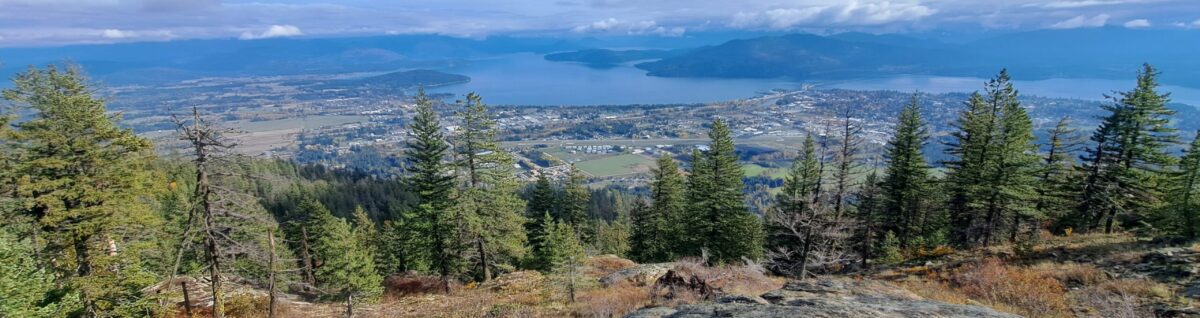
Camas Prairie Road Trip, Day Two, Lawyer Creek, Cottonwood and Cold Spring Canyon.

I took a two day trip to explore the Camas Prairie and specifically the old route of the Camas Prairie Railroad. The Camas Prairie is south of Lewiston Idaho. Yesterday I hiked from Rubens to Lapawi Canyon.

The previous evening, I did a reconnaissance in search of a likely place to park so I could hike a section of the rail easement that had some of these tall trestles in vain. Most of the farm roads that crossed the rail line were one lane gravel roads with ditches on either side. However I did locate a number of impressive bridges. That narrowed my search down.

Finally the next morning I found a place. Visible enough from the main highway to check the probability of vandalism to my rig and far enough off the main road to make it look like I might be a farmer checking his fields all without blocking access for others. The only rails I saw on this hike were embedded in one of the few paved local roads in the area.

The hike started with open views of the Camas Prairie farmland while it slowly curved away from US-95. The highway for the most park stays within a mile to the east of the railroad easement making this section much less remote than yesterdays hike down Lapawi Canyon.

After a short walk, I came to my first trestle. Looked like an easy walk but looks can be deceiving.

This turned out to be the old trestle over Old US-95. It had to be one hundred feet high and much longer than it first appeared. There was no metal plating one this bridge and it looked like it had been abandoned much longer than those I crossed yesterday.

A lot of the wood was rotten, some of the ties loose or missing and the structure creaked and moaned under the weight of a full grown man. There’s no way it would support a train ever again. For the first, but not last time I was unnerved by the crossing. I was kind of surprised that it has not been removed as a safety hazard to the road below.

When I got to the other side I got a better view of the true size of the trestle. The good news was I made it across. The bad news was it wasn’t practical to bypass it on the way back so I was going to have to do it again.

Next I followed the rail easement through shallow cuts and small embankments with stunning views of wild flowers and farmland.

Further down the line, I came across a partially removed trestle. I guess it was the end of the line for me on this hike.

Well it turned out this trestle was bypassed years ago when the line was still active. The actual easement followed a newer embankment around the site.

Another cut through the rocks was next. The trail passes through open ponderosa pine forest here on the way to the next goal.

Here is the start of Lawyer Creek Canyon trestle. It doesn’t look like it from here but the bridge is 1500 feet long and almost 300 feet above the canyon.

Although this bridge looked to be in much better shape than the Old US-95 bridge, I opted to only walk out the first hundred feet or so to just before it opened up out of the forest. The bridge is highly visible from the highway and by now I was more worried about having to recross the first bridge.

I did manage to get under the south end of the bridge to admire the construction. The trestle continues in to the distance far outside of the forested area in the photograph.

I turned around and retraced my path to my rig. Crossing back over the Old US-95 trestle was a little scary but uneventful. Now it was time to explore the area.

I drove through Cottonwood and explored some of the back roads west of that town. I came across the St. Gertrude Monastery. This has to be one of the most unique buildings around. The view of the old monastery is partially blocked by over landscaping and ugly newer buildings but still worth a look.

The end of the pavement brought me to Kuetterville and this amazing chapel. Holy Cross Church was an unexpected sight out in the middle of farmland.

On the way back towards the town of Cottonwood, I was treated to this amazing view across the Camas Prairie towards the Seven Devils Mountains in the Hells Canyon Recreation Area. I last visited this area a couple of years ago and it’s about time for a return visit.

The Camas Prairie sits on a relatively high plateau (plus or minus 4000 feet) partially surrounded by the deep valleys of the Snake and Clearwater Rivers which are about 1000 feet above sea level. It feels like it’s own little world up here and kind of like stepping back in time half a century, and that’s in a good way.

I wasn’t done exploring the Camas Railroad so I drove back to Craigmont to try and find another quiet section of the easement to walk. About three miles northwest of town, I found a place to park off the road next to a crossing with the old easement.

Again I walked through small railroad cuts in the landscape bracket by rolling farmland. I figured I had about two more hours to kill before I drove back to Post Falls. I didn’t know what I’d find but hoped that whatever it was that it would be worth the effort.

Around the next corner was just about the prettiest view I could have imagined.

I even flushed out a couple of white tail deer.

Past another bend or two I found myself at the east side of the Cold Creek Canyon trestle. This bridge was much bigger than I expected and in similar condition to the Old US-95 bridge. I decided to cross it anyway.

It was definitely an adventure. I always wanted to check out some of these engineering marvels. After this trip I think I’m good now.

On the far-side I was able to get a better perspective on just how big this bridge really is. The timberwork is amazing. Parts of this old rail line were used in the Charles Bronson movie, Breakhart Pass.

I walked about another mile on the other side and found this old speed limit sign. I came to the only place in my trip that the old railroad easement was blocked a little further so I turned back and again crossed the Cold Creek Canyon trestle.

This time after I made it across, I descended a little way down the canyon to appreciate the timberwork from below.

Now it was time to return home. I made the nearly three hour drive back down Lapawi Canyon, through Lewiston Idaho, up the Lewiston Grade, through the Palouse Prairie and back to Coeur d’Alene. I’ve always been fascinated with abandoned railroads. After this trip I’m thinking maybe some bigger mountain hikes might be in order.

Camas Prairie Road Trip, Day One, Camas Railroad from Ruben to Lapawi Canyon and Winchester State Park.

I took a two day trip to explore the Camas Prairie and specifically the old route of the Camas Prairie Railroad. The Camas Prairie is south of Lewiston Idaho.

I originally planned to start my first hike at one of the two bridges that cross US-95 on the way up Lapawi Canyon but was unable to find a safe place to park off the side of the busy highway so I drove up to the small community of Rubens.

Rubens is a tiny collection of houses and a grain elevator about eight miles north of the highway. One my way in to “town” I came across this amazing piece of art. Sometimes the works of man and nature combine to create true beauty.

I parked off of a gravel road that crosses the old railroad easement near the grain elevator and started walking north.

Immediately I was walking through beautiful Idaho farmland. The Camas Prairie is some of the most productive grain growing land in the country.

Much of the old rail bed was covered in wild flowers. I imagine in the late summer that the growth would be thick enough to make walking the easement a challenge.

About a mile in the railroad bed turns towards the west and goes through a couple of low cuts in the landscape.

After emerging from one of the cuts I was treated to my first view of the side canyon that ends up joining Lapawi Canyon. Piles of old railroad ties were scattered along the route.

Soon, I came to the first of four tunnels I ended up passing through.

This tunnel was in very good shape considering that it has been twenty four years since the line was abandoned. This one also was curved so that you had to go in about halfway before you saw light from the other side.

Soon I came to the second tunnel. Here is where I saw my first Black Bear in several years. I was not able to get even a fleeting photo of he or she before the bear bailed down the slope. This tunnel was much shorter and as you can see nice and straight.

After the second tunnel, I came across the first of nine bridges I ended up walking across. The metal plates were intended to protect the bridge from fire caused by sparks from the trail wheels.

The third tunnel looked a little more worse for the wear. After getting past this obstruction I discovered the rest of the easement had not had the rails removed.

It was a long way down and each bridge seemed to have a different layout of the metal plates. The rails seemed to add strength to the bridges but were also tripping hazards for the unwary.

At some point I got too close to a nest so I was “attacked ” by a very angry grouse. I did almost step on one of the fleeing chicks so I guess I deserved it. A hasty retreat seemed to satisfy the mad fowl.

In places the rail bed was filled with lupines and other wild flowers. They added a lot of color to the walk. One more tunnel was around the corner.

After this curved tunnel, I was no longer following the side canyon. Now I was above Lapawi Canyon and the big views that came with it.

The old rail bed from here on alternated between rock cuts and trestle bridges. The line at one time had the nickname of the “railroad on stilts” because so much of it was elevated.

At the bottom of the canyon I could see the highway I had so recently drove up in my search for an access to the lower section of the easement. I think I got lucky. The views looked much better up here.

Some of the rock cuts turned out to be a challenge to negotiate. I guess after decades of exposure to the elements, it is to be expected that the line would slowly revert to nature.

The views from the bridges were outstanding. I was somewhat surprised at well the bridges had weathered the years of neglect. Later on my trip I would discover that this is not always the case.

Finally I came across this beauty, a bridge with an S curve and much bigger than any of the others. I thought about calling it good but just had to see what was on the other side.

Too bad I forgot to bring a lawn chair. Imagine sitting on this platform and soaking up the sun.

So this is the view from almost the other side. It looked like the easement was going to go through another tunnel next.

The entrance to the next tunnel was right around the corner. This was where I saw my first warning sign of any kind. The portal was almost blocked by rockfall. I figured if someone went to the trouble of warning me that I should heed the warning. I was already well over two hours out so this is where I turned around.

On the way back I enjoyed the view of the first railroad bridge from this post behind me. Again, I was glad I did the upper hike. I understand that the lower you go in the canyon, the better your chance of crossing paths with a rattlesnake.

I enjoyed the views on the way back as much as I did on the way in.

Now it was time to find my camping spot. I had reserved a site at Winchester State Park only a few miles back near the top of the grade up Lapawi Canyon and at the edge of the Camas Prairie.

Winchester State Park is a small state park with a primitive campground on a small manmade lake. There wasn’t much to do there but it was a place to stay. The ride back home was well over two hours and I wanted to explore the area more the next day.

They did have a nice foot bridge accessing the short trail system.

Before I called it an evening, I made a short side trip to check out my goal for the next day, the Lawyer Creek Canyon bridge. There is a pull out with interpretive signage on US-95 with a great view of the trestle, the only metal one on the line above Lapawi Canyon. This is the view from the other side on from a one lane gravel farm road.

My original plan was to hike up Lapawi Canyon from USD-95 the first day and then explore around the Lawyer Creek trestle the next day. I think modifying the hike to start in Rubens and work my way down turned out much better.

The Trail of the Coeur d’Alene’s, along the Coeur d’Alene River.

On two rides over a three day period, I bicycled a thirty mile section of the trail out and back from Bull Run Lake to Springston and then from Pine Creek to Bull Run Lake. This middle section of Idaho’s best rail trail is by far the most scenic part. East of Pine Creek, the trail travels through the Silver Valley and all the small towns in it. West of Springston, the trail enters the Coeur d’Alene Reservation and follows the lakeshore and Plummer Creek to Plummer.

Friday, June 7, 2024 Bull Run to Springston.

The Bull Run Trailhead is just off of State Road 3 in Rose Lake about four miles south of the I-90 exit. It is close to mile marker 33. West of the Bull Run Trailhead, the trail passes through nice forested areas along the river.

Extensive wetlands are found on both sides of the trail between the State Road 3 underpass and Harrison.

The marshlands support a lot of wild life such as Great Blue Herons. Over the seventeen years I’ve ridden the trail, the State of Idaho has acquired much of what was once farm and ranchland in this area and is restoring the wetlands while mitigating heavy metal contamination which used to decimate bird life.

Around Medimont the trail passes along the shore of Medicine and Cave Lakes, part of a chain of shallow lakes connected to and on both sides of the Coeur d’Alene River.

Near mile marker 18 you come to the Springston Trailhead. Another three miles would put you in Harrison.

The old bridge at the Springston Trailhead has been condemned and is now closed to all traffic. Springston was once the site of a small town. No trace of it remains.

Sunday, June 9, 2024 Pine Creek to Bull Run Lake.

Right off of the Interstate there is a trailhead just outside of Pinehurst, the second largest town in the valley. A short spur goes right in to downtown and there is more parking there. The Pine Creek Trailhead is near mile marker 48.

About halfway between Pine Creek and the Kingston Trailhead an old railroad bridge carries the trail over the South Fork of the Coeur d’Alene River.

Just past Kingston another bridge crosses the North Fork. You will usually see lots of folks floating this section of the river.

The next five miles into Cataldo is the most scenic section of the trail. In the background is Frost Peak. Some years it has snow on top until July.

There are several rock cuts along the trail.

Just before the Cataldo Trailhead you cross one more big railroad bridge, this time over the river after the south and north forks combine.

Cataldo Mission is not on the trail, but is close by. If one has time I highly recommend dropping by this little Idaho State Park and visit the oldest building in the state on your way back to Coeur d’Alene and Spokane.

Between Cataldo and Bull Run, the trail continues along the Coeur d’Alene River and its adjacent wetlands.

Another view of Frost Peak and the river.

You can’t go wrong with this trail. I usually try to start my out and back rides heading west into the prevailing wing so if it picks up later in the day it will be at my back.

And of course they’re moose. I saw one each day. My record is seven on one ride. I’ve seen them pretty much everywhere between Kingston and Springston.

The thirty miles between Pine Creek and Springston is in my opinion the nicest bike trail in the country and I have rode on the Mickelson, the Elroy Sparta and the C&O.

The Palouse Cascade Trail, part 1 Pine Creek and Rock Lake.

Today I hiked a short but scenic stretch of the Palouse Cascade Trail from Hole in the Ground Road outside of the small community of Pine City to the high bridge on Rock Lake that has been closed by the State of Washington.

On the way I stopped outside of Rosalia to snap a picture of this amazing viaduct. The Milwaukee Road was once one of the five transcontinental railroads but was abandoned decades ago. Most of he old railroad right of way was acquired by the State of Washington and is managed as the Palouse Cascade State Park.

At the place were Hole in the Ground Road crosses the trail there is a wide shoulder that you can park on. There is signage both directions and it was nice to know how far I was going to be walking.

About half a mile in you come to Pine Creek Bridge #7. At this location a couple of rail cars derailed and are still here to this day.

The old railroad bed follows Pine Creek.

Pine Creek is a scenic little stream.

After the railroad bridge, the trail passes through cuts in the basalt rock.

As you continue, the rock walls become more impressive.

As the creek drops, the railroad bed stays level and after awhile you are far above it and the views get even better.

It wouldn’t be an abandoned railroad without a tunnel or two. A deep cut in the rocks leads you to the entrance.

The tunnel is curved and you cannot see light from the other side when you first enter it. If you persevere and walk in as far as you can see, you will come to a point where you can see light from the other end.

On the other side there are stunning views of basalt cliffs framing the Pine Creek Valley. The bottom of the valley is farmland. These over sized canyons were formed by ice age floods as the tiny creeks in them could never produce the power to carve out the gorges.

Soon you will catch a glimpse of the north end of Rock Lake. This three and a half mile walk is on the boundary of the Palouse Prairie, a rich wheat farming area with rolling hills and the Channeled Scablands, the place where ancient flood waters scoured the land down to bedrock.

The views of Rock lake open up. This is a fascinating body of water. The largest natural lake in eastern Washington it is over four hundred feet deep and almost surrounded by steep cliffs making access very limited.

Opposite from the lake the cliffs seem to get even bigger.

Rock Lake has a vibe. There is even a legend about a lake monster and stories of derailed railcars on the bottom. Due to it being orientated with the prevailing summer wind, the lack for sheltered bays, limited places you can even land a boat and submerged basalt pinnacles boaters are strongly cautioned and kayaking discouraged.

It is hard to relate just how big these cliffs are and how big the waves can get when the scabland winds blow over miles of lake water.

This is an epic landscape. It is amazing they built a railroad through here a hundred and twenty years ago. The Milwaukee Road failed largely due to it being routed through such remote country. The railroad through Montana, Idaho and Washington was abandoned in 1980.

Near the end of the passable part of the trail impressive cliffs with basalt arches dominate the far shore.

This bridge is fenced off and posted by the State of Washington. I crossed it about seven years ago and it was sketchy back then. A second tunnel is just beyond and another mile or so down the line a section of the railroad easement reverted to private ownership and it is blocked at that point. I raised my camera above the chain-link fence to get a decent shot of the bridge.

So I turned around and walked the three and a half miles back to my car. That’s when I read the sign. The sign on the other side of the road mentioned that the trail was closed that direction due to the decks of four bridges being destroyed during a devastating wild fire a few years ago. It would be nice to get those rebuilt along with the deck of the bridge I had to stop at.

The Palouse Cascade Trail spans the entire state of Washington and ends just a few miles from the Trail of the Coeur d’Alene’s which almost spans the Idaho panhandle. The Hiawatha Trail is also an abandoned section of the Milwaukee Road. I hope to check other sections of the Palouse Cascade Trail in the near future. The section I walked today is one of the most beautiful and interesting trails I have ever explored. I went back recently and more photos can be found here.

The Trail of the Coeur d’Alene’s, Biking through the Silver Valley.

The eastern twenty miles or so of the Trail of the Coeur d’Alene’s is often over shadowed by the more rural and extremely scenic eastern two thirds of the trail. However this is a favorite ride of mine because of all the small towns it passes through and for the challenge of climbing the grade from Wallace to Mullan.

I started todays ride in Kellogg at the base of Silver Mountain. One of the worlds longest single stage gondolas hauls skiers to the top in the winter and is open in the summer on weekends for tourist. The top of the mountain is over three thousand feet above the town and the Silver Mountain Resort.

Kellogg is the largest town and the economic center of the Silver Valley. Unfortunately it has not been very successful in remaking its image from a center of the mining industry to that of a true winter sports destination. The bare bones are there with an easily accessible nice ski resort, tons of old historic buildings and a good infrastructure but old downtown (uptown) is kind of depressing.

There is a nice park and trailhead along the abandoned railroad through the city and the old depot is now a visitor center. Within a mile or so, you’re outside of town and the trail runs along the south bank of the South Fork of the Coeur d’Alene River.

The area has a rural look.

The South Fork is pretty to look at, but isn’t really used recreationally. It was heavily polluted by the mining industry decades ago and all of the major towns in the valley are on it as is their storm water runoff. The North Fork and Little North Fork of the Coeur d’Alene River are a different story and are extremely popular with fishermen, tubers and all outdoor enthusiasts.

Interstate 90 parallels the trail through out the Silver Valley. It is almost always within ear shot and often visible from Kellogg to Wallace, but for the most part is separated by the river and/or the small towns themselves from the trail. It does however provide easy access for the public.

The next town is Osburn. Unlike Kellogg which is an aspiring ski resort and Wallace with it’s amazing historic district, Osburn is simply a place were working class folks live and raise families. It has a small business district north of the trail and residential areas south of it. A large local park greets you as you enter the town limits.

The small downtown and laid back feeling of the place reminds me of a Midwest farm town, but hardrock mining is what made this town.

Between Kellogg and Osburn and just north of the trail on Big Creek Road you will find a somber memorial to one of the worst industrial disasters in American history. The Sunshine Mine Fire still resonates in the valley. I remember hearing about it in the news when I was a kid. Most everyone who grew up here lost a loved one or had friends who did.

An interpretive sign gives a brief explanation of what happened. I highly recommend those who are interested to do some research on this event.

After riding through Osburn, the trail passes through more rural areas before the next town.

The next town is more like a small community. It isn’t incorporated and is across the interstate from the trail requiring a side trip. Silverton is however fascinating. It has some legitimate historic buildings and as it’s some of the only flat ground around, Wallace High School few couple of miles to the east uses it as the location for their sports fields.

I don’t know what the building in the upper picture is currently used for. The lower picture is of Silverton Mountain Manor, a boutique hotel and restaurant.

Continuing into Wallace, you cross the South Fork on this old railroad bridge. There is a business that makes industrial fiberglass duct work next to it and they installed their own interpretive sign to explain what they do. Very cool.

In Wallace the trail is located under the viaduct for Interstate 90. Wallace was the last place the interstate was completed and original plans called for leveling much of the downtown historic district. Opposition was so intense that the powers that be decided to build the highway over an active railroad line instead. Fun fact, a model of this viaduct was used in the eruption scenes from the movie Dante’s Peak which was largely filmed in and around Wallace.

This is some of what they saved by building the highway over the railroad. Wallace is amazing. In addition to being the county seat, the place has some most excellent shopping and dining. More on that later.

So only a few years later the railroad was abandoned and we ended up with a “covered” bike trail, at least for half a mile or so. I found refuge here years ago during a rare summer thunder storm.

From Wallace to Mullan, the trail begins a steep ascent. Even though this is still an old railroad grade, it is a six mile grind up the hill. Soon after Wallace you will pass the Restless Waters rest stop with restrooms and picnic tables.

The last six miles of the trail in addition to being very steep, is also located much closer to Interstate 90. That’s the highway bridge in the background and an old abandoned local road bridge I’m taking the photo from with the bike trail bridge in the middle.

Even then mostly the highway is buffered by the creek or a band of forest, giving a respite from the traffic noise.

Well not always. Sometimes the road is right next to the trail. The good news is you’re either working so hard to climb the grade or flying so fast down it that you don’t have time to think about it.

Finally you get the the last town on the trail. M is for Mullan. Mullan is a real mining town. One of the last big silver mines in the valley is the main employer. All along the trail you see evidence of the mining industry’s past, here you can see the present.

Mullan is the real deal. Nothing fake or made up about this place. It is where the miners live and raise their families.

The trail officially ends where you enter Mullan but you can continue to ride on the Northern Pacific trail through town. The bike trail does end at the football field for the Mullan High School Tigers, complete with paw prints. Just beyond is the Lucky Friday Mine.

Now it’s time to fly or coast depending on what motivates you the six miles or so to Wallace and then the rest of the way to Kellogg.

Well with one stop at one of my favorite places to indulge in a well deserved beer. After all they brew their own and if you’re hungry the food is amazing too. The City Limits Brew Pub one block north of the trail. More photos can be found at the website for the Friends of the Trail of the Coeur d’Alene’s.

The St. Maries River Railroad

Today I hiked a section of a abandoned spur of the St. Maries River Railroad south of Santa to the old tunnel about halfway back to the town of St. Maries Idaho, about an hour south of Coeur d’Alene.

I started my hike at a pullout just south of the State Road 3 bridge over the old line about 30 minutes south of St. Maries Idaho.

If you go south under the bridge, the rail line parallels the river into Santa about three miles away. The old line at one time continued all the way to Boville east of Moscow Idaho. I headed north in to the wilderness.

I immediately crossed a small creek on this bridge. The bluffs in the background looked worth exploring.

Within half a mile, it became evident that no trains had passed this way in a long time. My understanding is that the line was last used about a decade ago.

Large basalt bluffs border much of the route on the inland side of the old rail bed. The St. Maries River is usually right next to it as well.

Old railroad lines can be a little creepy. It is always a good idea to turn around occasionally to make sure nothing is following you. It is North Idah0 after all.

Looking up is advisable too. You never know what’s watching you from above. Also, I’d hate to get hit by a falling rock.

About an hour and a half in, I came across this small bridge over Flat Creek right where it empties into the river.

It was higher than it looked at first.

Walking on an abandoned, but still intact railroad is a little more difficult than it sounds. In some stretches the lack of ballast forces you to walk on the ties and they’re never spaced for a normal stride. The round trip ended up being just over twelve miles, about as long as I want to go in one day.

The old pieces of railroad history scattered along the line and the extreme isolation of this section created a kind of haunted atmosphere. The old telegraph post looked almost like the entrance to a graveyard.

Here it appeared the railroad used old rail cars filled with boulders to create a barrier to protect the line from the river at this outside bend.

Finally I arrived at the first bridge over the St. Maries River. I originally planned to hike to this bridge, the tunnel just after it and then the second bridge but it took longer to get here than I expected so I cancelled the half mile or so each way to the second bridge.

The bridge was an impressive structure with nice views of the river both upstream and downstream.

Immediately after the bridge was the entrance to the tunnel. You could see daylight through it and I would guess it to be less than four hundred feet long. No problem, right?

Actually it was creepy as hell inside. You could see that large chunks of rocks had been falling off the ceiling.

And I thought the north end was creepy. I almost didn’t want to go back through it but my hike out was at an end and it was time to turn around and head back.

The railroad bed on the south side of the tunnel seemed completely different, like it had been abandoned for much longer. The vegetation was much thicker, even on the old rail bed and it was much wetter. The ties had algae on them making walking a little more treacherous. Because the tunnel cut off a long bend of the river, the railroad on the south side was much higher above it than at the other side of the tunnel only a few hundred feet away.

On the return hike a cold drizzle made me curse my luck. Five minutes after I got in my car, a downpour of rain and small hail made me reassess my luck. I guess it was good after all. Six hours from when I started I made it back to my rig and then drove another hour and a half back home. I plan to explore more of the Pacific Northwest’ old rail lines in the future either by foot or bike.

The Trail of the Coeur d’Alene’s part 1

The Trail of the Coeur d’Alene’s is a seventy two mile long paved rail trail that almost crosses the Idaho panhandle from Plummer to Mullan. The trail was constructed on a former railroad that was primarily used to haul mining ore from the Silver Valley to Spokane as part of a remediation for a super fund site. This trail is consistently rated as one of the top ten bicycle trails in the United States due to its scenic beauty, accessibility to a major urban area and the variety of landscapes it traverses. The trail can be best described in four sections. From west to east, the direction of the prevailing summer wind, the first fifteen miles are almost exclusively located within the boundaries of the Coeur d’Alene Reservation and this part of the trail is managed by the tribe. The western terminus of the trail is located in Plummer Idaho, the largest town in the reservation and is just of off US95, the primary north south road through the panhandle. From Plummer, the trail crosses a couple of miles of mixed farmland and low density residential areas before it begins a five mile screaming descent (maybe 800 feet of elevation) to the lake were it passes through Idaho’s oldest state park, Heyburn State Park. It then crosses the south end of the lake on a modified railroad bridge and then follows the shoreline of the lake another seven miles in to the historic town of Harrison just outside the reservation boundary. Harrison is located on State Road 97 and is easily accessible (thirty minute drive) from Interstate 90.

At the Plummer Trailhead, the tribe memorializes all of its members who gave their lives in the defense of their nation from the the present back to and including their war against the United States in the 1800’s. Everyone should honor their heritage and the sacrifice of those who fought for their freedom. This should be a lesson for all of us.

The Chatcolet Bridge connecting Heyburn State Park to the eastern shore of the lake is a highlight of the trail. The original center pivot swing bridge was raised to allow boat traffic and the approaches were rebuild in a stair step design that makes climbing to the top easier and descending an adventure.

Along the eastern shore of Lake Coeur d’Alene the old rail road cut off several points to make the route smoother creating these scenic views.

This is the view heading north towards Harrison Idaho.

In Harrison, a short ride or walk up the hill will bring you to a small park, two nice restaurants and an ice cream shop. Just past the center of town one can still see the remnants of industrial buildings that utilized the old railroad.

Where the Coeur d’Alene River meets the lake is called Harrison Slough. You can see fields of water lily’s in bloom most of the summer.

The Friends of the Trail of the Coeur d’Alene’s.

The Hiawatha Trail

The Hiawatha Trail follows the old railroad route of the Milwaukee Railroad from the Taft tunnel at the Montana and Idaho state line to Pearson’s about fifteen miles down the grade. The Olympian trail continues into Montana to about St. Regis and old rail line can be followed down to Avery on the St. Joe River on a forest service road through several more one lane tunnels and over a couple of high trestle bridges. The former transcontinental rout continues west along the St. Joe River and across Washington as the Palouse to Cascades Trail. Here are a few photos of the Hiawatha.

After navigating the one and a half mile tunnel under the Bitterroot divide, this is the Idaho end of the tunnel.

One of the high trestle bridges over side canyons.

And then straight into a short tunnel.

More high bridges for your enjoyment.

Wildlife

Some wildlife is epic and some not much so, but it is here to appreciate.

There are numerous short tunnels leading down to Pearson’s.

After turning the bend, you can see where you were.

Looking down across Loop Creek

If you’re heading up, you can also see the bridges you have crossed.

The view from one of the bridges. Vertigo.

Tunnel #28.

One the deck of one of the trestles.

Looking down off of one of the bridges.

At the bend looking down Loop Creek.

The view looking across Loop Creek.

Leaving one of the tunnels.

There is a significant fee to ride the trail that can be paid at Lookout Mountain or on site during the season. A shuttle is available to take riders from Pearson’s back up to the Taft Tunnel also for a significant fee. I prefer to drive over Moon Pass from Wallace Idaho to the lower trailhead at Pearson’s and grind it up hill through the tunnel and coast back enjoying the scenery and saving some cash. The official site is here.

The Friends of the Trail of the Coeur d’Alene’s website has information on more bicycle trails in North Idaho.