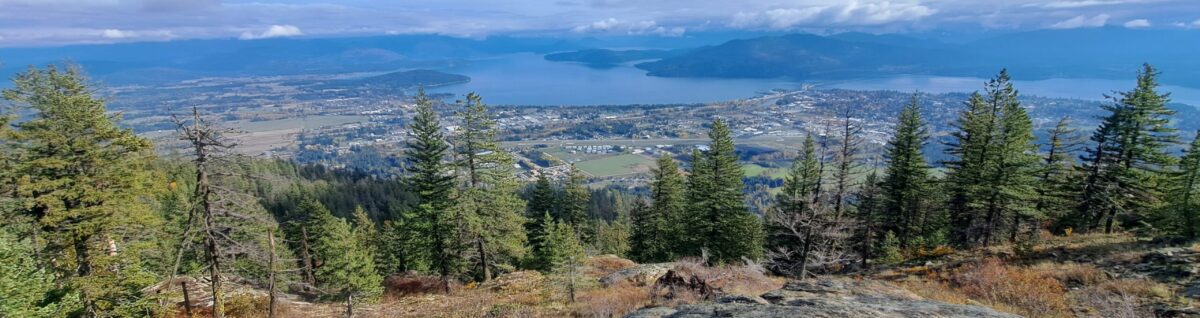
Palouse Cascade Trail, Rock Lake and Pine Creek, a return trip.

Today I repeated an adventure from last summer. The hike from Hole in the Ground Road to the end of the trail is relatively short but extremely scenic. Best of all being an old railroad grade it is flat.

Less than a mile from the starting point is a bridge over Pine Creek and the site of a derailment before the rail line was abandoned. Two old rail cars were left here as they were too damaged to repair and moving them would have cost money. The Palouse Cascade Trail crosses Washington State from the Idaho line to the outskirts of Seattle. The trail is the Washington portion of a former transcontinental railroad known as the Milwaukee Road.

The trail follows Pine Creek from Rosalia to Rock Lake. Along the way it joins with the creek that drains Bonnie Lake, Rock Lake’s sister to the north with which it shares a canyon, the aptly named Hole in the Ground.

About two miles in we came to this old railroad tunnel. The tunnel is in excellent shape and you can get through it without using flash lights, barely.

This is the first of two tunnels along this stretch of the trail. The second is beyond the point the trail is closed. I have hiked through it many years ago before the state closed off the bridge that accessed it. The second tunnel is in much worse shape and I remember having to climb over rock fall at the far end of it.

Not long after the tunnel Rock Lake comes into view. The views of the lake steadily improve the further you push on. The far side of the canyon the lake is in is very impressive with multiple benches shaped by multiple catastrophic flood events clearly visible.

At this point the trail is hundreds of feet above the lake. Rock Lake is the largest natural lake in Eastern Washington.

The landscape the trail passes through dominated by basalt cliffs. The primary vegetation consists of open Ponderosa pine forests.

Rock Lake is a fascinating body of water. In places it is over four hundred feet deep and surrounded by shear cliffs. Boaters are strongly cautioned as it it subjected to strong winds, submerged rock pinnacles and has almost no safe landing places along the shoreline.

Just before the trail is blocked off at three and a half miles in you will be treated to awesome views of the north half of the lake.

At this bridge the trail is blocked by a chain-link fence and is well posted. The decking on this bridge is extremely rotten and the funds to rebuild it are simply not available at this time. Not too far around the bend is the second tunnel which would require extensive work to make it safe for trail users. A shorter section of the trail starting on the south end of the lake is likewise blocked by a deteriorating bridge. Additionally a section of the rail easement between these two closed bridges has reverted back to private ownership and is closed for public use.

This is one of my favorite easy hikes in Eastern Washington. The round trip is only seven miles and the grade is flat. Trail users are asked to register with Washington State Parks as the trail has extremely remote sections and no amenities. You can do so here. On this day we passed five other folks enjoying this slice of Free State America.

East from the crossing with Hole in the Ground Road, the trail continues to Malden and eventually Rosalia. Between Malden and here, several old rail bridges are still closed due to the damage they suffered from s wildfire five years ago.

North Cascades Road Trip, Hiking Lake Annie and Blue Lake.

I made the long drive from North Idaho to Winthrop Washington and secured my room for the night before I continued towards the North Cascades and my hiking destinations.

Winthrop is the nearest town to Washington Pass and the North Cascades, at least from the east side. It was reimagined as a tourist destination in the early nineteen seventy’s and rebuilt in an old west theme. It is kind of neat to look at.

This place was recommended to me, but like a lot of other businesses in town it was closed. The sign said due to staffing shortages. I tried another one but found it pretty disappointing.

Day one, hiking part of the Maple Pass Loop to Lake Annie. Winthrop is over thirty miles from the trailheads, in other words a good long haul. On the drive to Washington Pass you gain 3700 feet of elevation.

A couple of miles past Washington Pass, I came to the Rainy Pass Trailhead where the Maple Pass Loop starts and ends and is also where I paid my fee using my America the Beautiful Pass. That’s a lot of passes for one sentence.

The trail starts in mature forest and climbs using a couple of switchbacks towards Lake Annie. It was well made and moderately steep. On much of it I was treated to filtered views of the mountains on the other side of the valley. Interestingly neither this hike or the one I took on the second day are in North Cascades National Park. Both are located right at the edge of it but are inside and managed by the Okanogan-Wenatchee National Forest.

On the way here I drove through over a hundred miles of smoke filled skies. West of the trailheads heading towards Lake Ross were worse. Visibility was down to 100 feet. Here near the pass, I was above most of the smoke and the views were much better.

After a mile or so the trail left the mature forest and crossed several avalanche chutes on its way to a large cirque basin. The views were outstanding.

Looking up from the trail the granite cliffs were imposing. There was a lot of mountain ash along the way with their distinctive orange seed pods.

A mile and a half in I got my first views of Lake Annie with it’s unique little island. On the far side of the cirque you can clearly see some of the scars or chutes left by avalanches in the past.

I continued up the increasingly steep trail and the view of the lake became much better. Here for a couple of reasons is where I decided to turn around. I was about two and a half miles in and gained just under a thousand feet from the trailhead.

The Maple Pass Loop Trail continues over, you guessed it, Maple Pass and returns along a steep ridge overlooking Rainey Lake. The entire loop is seven and a half miles long and gains a little over two thousand feet. I talked to some folks who were finishing up the loop and they said it took them over six hours. I didn’t have that much time and wasn’t ready to tackle another grand of elevation today. I settled for five miles round trip and some outstanding views. Maybe next time.

Day two, the Washington Pass Overlook and hiking to Blue Lake. After driving the long thirty two miles or so to Winthrop to spend the night at the Virginian Inn. I got up at six in the morning to make the trip again.

At Washington Pass there is a short access road leading to a parking lot with a short trail to some amazingly scenic views. Unfortunately today was much smokier. The only other time I drove across the North Cascades was during a rain/fog event so I still had much better views this time.

The smoke did add an interesting effect on this view looking back down the pass at the surrounding mountains but still I could have done without it. At least it wasn’t as bad as my fiasco of a trip to Crater Lake last year.

Looking the other direction was a view of some impressive rock spires known as the Liberty Bell and the Early Winters. My next destination, Blue Lake was just on the other side of them.

Like the previous days hike, the trail started out in a mature forest and eventually worked it’s way up to some open meadows. Even through the smoke the views awesome.

A little less than two miles in I came to a junction with the trail that accessed the rock spires for serious climbers. I read that before they built the North Cascades Highway in 1972 that climbers had to hike in sixteen miles just to get to the base of these imposing rocks.

No wonder they weren’t summitted until the 1950’s.

At two and a third miles in I got my first views of Blue Lake. A few patches of late season snow could still be seen on the far side.

Where the trail makes it to the lake you will have to cross a small creek on a makeshift bridge of logs and rocks. Like most mountain lakes the water clarity is amazing.

The remains of an old cabin are near the shore of Blue Lake. I have no idea how old these ruins are or who built it and why but it is interesting to see.

At the cabin a side trail continues along the shore and gains elevation above the lake in a hurry. You should definitely take this short loop trail called the Tarn Loop Trail. In addition to having better views of Blue Lake it gets you away from the crowd as most people hiking to the lake stop as soon as they reach the shore. I kind of liked the upside down reflections of the surrounding landscape.

Across the lake the Early Winter spires and the Liberty Bell provided the background. By now the smoke was getting thicker.

The Tarn Loop Trail was under half a mile long and did provide access to a tarn which is a small mountain pond.

Beyond the tarn an open slab of rock gave me a nice view across the valley towards Cutthroat Peak and Whistler Mountain.

On the way back I was able to appreciate some of the small views. It looked like this boulder was trying to support it’s own little ecosystem. So after all was said and done I managed a little over five miles including the Tarn Loop Trail and a little over one thousand feet of elevation gain.

Back at Washington Pass I stopped for some of the little views also. Beauty is sometimes where you find it.

Between both days I hiked maybe ten miles and gained over two thousand feet. Now it was time for the long drive through the smoke back home to Idaho.

Spokane River Alert

For the first time I’m aware of, parts of the Spokane River have completely disappeared. Today I took a bike ride along the river to check out this phenomena.

At Corbin Park about three miles upstream of the Idaho Washington state-line and below the Post Falls Dam, the river is still flowing, albeit at a much reduced rate. The Post Falls Dam recently restricted the flow through their gates to the minimum allowed by law to keep water levels stable in Lake Coeur d’Alene through the boating season. During high water in the late spring, I have kayaked this section of the river to Harvard Road in Washington. .

The Spokane River is a substantial waterway running about 100 miles from it’s source at Lake Coeur d’Alene to it’s junction with the Columbia River and Lake Roosevelt. Lake Coeur d’Alene is fed by two large rivers, the St. Joe and the Coeur d’Alene Rivers in addition to numerous small streams. Downstream from downtown Spokane the Spokane River is also fed by Hangman Creek and the Little Spokane River. The river drains much of the Idaho panhandle as well as Spokane County.

By the time I reached the Harvard Road bridge in Washington at mile marker 4 on the Centennial Trail, the water level had dropped considerably. This actually isn’t that unusual for late August. I’ve seen the river this low at this spot at least a couple of times over the past two decades.

By the time I made it about two more miles down the trail near the Barker Road bridge, the river bed was completely dry. This I have never seen before. An organization called the Spokane River Keeper has posted about this issue on social media.

For between two and a half to three miles the river bed was totally dry. In June and July this section of the river is very popular for kayaking, tubing, fishing and swimming. Now the only activity is rock hounding. I wanted to make a post about floating the river from Liberty Lake to Sullivan Park but never got around to it this summer. I’m guessing it’s a little late now.

By the time the river passed under the Sullivan Road bridge a tiny trickle of water started to refill the channel. The support post are newer so it’s hard to see but the normal high water mark in spring is about twenty feet up.

From this point downstream the river looks like a spring run as that’s because that is what it for all practical purposes is. What little water there is comes from the aquifer below. There is none coming from the lake or anywhere upstream.

The Spokane River is an important recreational asset and having even a short section of it totally disappear is a cause for concern.

It was a dry year but not a record setting one and the Post Falls dam is releasing water at the minimum rate allowed but that isn’t unusual for the time of year either. The best guess is that the river dried up here because the aquifer below it dropped significantly over the last year due an increase in local water use.

This is what I’m used to seeing on my rides along this section of the Spokane River. It would be nice if we could find out what caused the problem and do something about it. In the meantime I’m going to hope we get a super snowy winter and at least some summer rains for next year.

Floating the Coeur d’Alene River, Kingston to Cataldo

I took a break from biking, hiking and kayaking for one day to enjoy a leisurely float down a local river with friends and family. The Coeur d’Alene River is a popular recreational destination for fishing, tubing, kayaking and boating.

We started our adventure just outside of Kingston Idaho. Including our awesome guide Scott, there were eight of us. We booked our trip through Castaway Outfitters.

Over the next two hours and forty-five minutes we floated about six miles of the river in an area with no road access and almost no development. It is a very pretty river.

Being early August the water levels have settled down and other than a few ripples it is a flat water trip. In late spring the experience can be a little different and most trips at that time of the year revolve around fishing.

Wildlife commonly found along this stretch of water includes bald eagles and moose. We saw one of the former but with it being an afternoon float and a talkative bunch of folks we did not see a moose.

About have way down we ended up paralleling a section of the Trail of the Coeur d’Alene’s rail trail were it hugs the riverbank.

Here’s the view of a section of the river we floated from my favorite bike trail.

We made two stops along the way at beaches were we could swim and relax.

At our second stop this was the view looking downstream, By now the clouds had built up considerably making it a little bit cool to linger in the water for too long.

Just before we reached the end of our trip we passed under the bike trail bridge just north of Cataldo. Cataldo is the site of Idaho’s oldest building, the Cataldo Mission and the nice state park than it is in.

Unlike my other adventure no physical effort was required on my part. The guides do all the work. There’s nothing to do except relax, enjoy the scenery and share a good time with friends and family.

All too soon the adventure is over. The outfitters provide a shuttle service so we ended up landing were our vehicles were waiting for us.

This photo was from a previous trip on the bike trail near the starting point of out float trip.

Castaway Outfitters has a location on 4th Street in Coeur d’Alene where the trips can be booked and another next to Idaho’s oldest restaurant, The Snake Pit in Enaville Idaho where the guests meet to start their adventure.

Floating part of the Coeur d’Alene River is a great way to experience some of the natural beauty of North Idaho. Hopefully in the next year or two I’ll find time for a couple of more float trips in the Inland Northwest.

This trip is easily accessed. The store where everyone meets for this trip is just north of Interstate-90 at the Kingston exit and about 30 minutes east of the City of Coeur d’Alene.

The Ferry County Rail Trail near Republic Washington.

I made a three day road trip to the small town of Republic in the middle of the Okanogon Highlands, a mountainous area in North Central Washington. The highlight of this trip was that I finally got to ride much of the Ferry County Rail Trail.

There are a couple of ways to get to Republic from Post Falls Idaho. One of them involves driving north from Spokane and then crossing over the five thousand foot Sherman Pass. I took the other route. North of the town of Wilber, the State of Washington operates a ferry across Lake Roosevelt. This service is free and was an interesting way to start my adventure.

After crossing the lake the first few miles of the trip ran next to the Sanpoil Arm of the lake. It was a scenic fifty plus miles from the ferry landing to Republic.

After checking into my hotel I immediately drove the ten miles or so to the Herron Creek Road trailhead which is the start of a particularly scenic section of the Ferry County Rail Trail.

Within the first mile. the trail guided me to the south end of Lake Curlew.

For the next four and a half miles the trail was mostly right next to the lake.

At places where the trail strayed inland away from the lake shore, pretty countryside and mountain views were the norm. I even got to cross this little bridge over a stream that fed the lake.

Lake Curlew is a popular recreational area ringed with hundreds of vacation cabins. The lake is a couple of hundred feet deep and hosts numerous islands.

The surface of the trail is made of crushed compacted gravel and is about the best non-paved surface I’ve ever ridden on.

Even the non lake views are pretty spectacular. The Okanogons are a beautiful if little known outside of the immediate area mountain range. Being sandwiched between the Northern Cascades and the Selkirks will do that.

Around one more bend I caught a glimpse of my destination, a trestle bridge over the north end of the lake.

The bridge is one of the highlights of the trail. The acquisition and improvements to this trail have been a grass roots effort. Ferry County is an extremely rural area and much of the work has been done by volunteers and through grants and donations.

The views of the lake looking south from the trestle were beautiful.

When I crossed the trestle and arrived at what I thought was the end of the improved, or ridable section of the trail, I was pleasantly surprised to see that they were working on completing the graveling of the trail to the community of Curlew ten miles away where a second improved section has already been completed.

The return trip was just as pretty but from another perspective.

After an eleven mile leisurely ride, I was back to the trailhead and as time was getting short, I headed into town for my reward.

Republic, in addition to having an awesome name for a town featured in the Free State America blog, is a great little place to stay during trips to the Okanogans. Across the street was the Republic Brewing Company, a great place to relax and enjoy the products. Behind me was the Knotty Pine Restaurant where I got just about the best cheese steak I’ve ever had.

Bright and early the next day I drove to the trailhead on the edge of Curlew to ride another section of the trail.

This trail gets you out in the countryside in a hurry. As with the section along Lake Curlew, this part of the trail had an excellent surface and I could have easily ridden it on my hybrid.

The trail follows the Kettle River downstream towards Canada. Lightly traveled State Road 21 is on the opposite side but you rarely even hear traffic from it.

About three miles in you come to one of the highlights of this section of the trail, an old tunnel.

It is one of the shortest railroad tunnels I’ve ever gone through.

Looking back after passing through the tunnel was also a nice view.

Beyond the tunnel the trail seemed even more remote and appeared to get less use. Despite the grasses growing on the trail, the surface was still excellent for bicycling.

The river views kept coming. The Kettle River starts in Canada, flows south into Washington, then heads back into Canada for a while before once again heading south into Washington before it finally empties into the Columbia River.

In addition to deer and rock chucks “marmots” I did get to see a couple of moose crossing the trail. I missed the first and got this poor quality photo of the trailer.

I turned around near a place called Lone Ranch Creek about three miles short of the end of the trail and the Canadian border. I thought this little bridge could have used guardrails.

The views on the way back were just as nice as the ones on the way out.

The Kettle River Valley in Washington is a beautiful place.

And I got to go through the tunnel once more.

After about eighteen miles of some of the prettiest bike riding I ever done, I was back in Curlew.

After a brief stop at Lake Curlew State Park on my way back to Republic to grab lunch, I decided to take one more short bike ride.

On the same abandoned railroad line a second trail called the Golden Tiger trail connects Lake Curlew to Republic. I’m not sure why this section has a different name. The first few miles from Herron Creek Road towards Republic are unimproved and used primarily by ATV’s.

Heading towards Republic, the final two miles of the trail are paved and there is a trailhead at each end of this paved section.

Here the trail is located fairly high above the valley providing some pretty awesome views to the south.

Despite being very short, the paved section of the Golden Tiger Trail has some of the best views off of a bike trail I’ve seen.

I completed the four mile round trip and called it a day, at least as far as bicycling went.

After three short rides over two days I figured I got in about thirty three miles and saw much of the trail. I can’t say enough positive things about this trail and highly recommend that if anyone gets the chance, they should head out to Republic and check it out. Lake Curlew looks like a gem for kayaking too and Sherman Pass has some highly rated hiking. Until next time.

After a good nights rest at the Northern Inn I took my time driving home via Sherman Pass and Colville. It was a good road trip.

Hiking the Palouse Cascade Trail along the south end of Rock Lake.

The three mile section of the Palouse Cascade Trail from just east of the boat ramp on the south end of the lake to the point were it is closed to the public at an old railroad trestle is about three miles. As this section of the trail is a dead end it is seldom visited by cyclist or hikers. I decided to check it out anyway.

The old easement for the Milwaukee Railroad crosses Rock Lake Road about three miles north of the tiny village of Ewan. A section of the old rail bed south of Rock lake Road reverted to private ownership and is closed to the public. At the old railroad crossing there really isn’t anyplace to park so I settled for a gravel road shoulder just wide enough to get my car off the pavement.

From the road, a steep incline got me up to the second of two gates. For gate combos and trail rules go to the official site and register there. There must have been a bridge or an embankment here when the railroad was active. Now an abrupt cliff on the south side of the road leads to the old railbed that is now closed to the public.

Near the beginning of the hike the trail passes by Lavista Lake, a small body of water just east of Rock lake itself.

Washington State Parks places these markers so you know how far west of Chicago you are. They do correspond with the original markers used by the railroad.

Along the old railroad bed many of the old telegraph posts complete with some of the wires and glass insulators line the route. It’s nice to see a little bit of railroad history.

Less than a mile in I came to gate number three. Apparently this one stays open all the time.

The trail from here on followed the shore line of Rock Lake. Last year I hiked a section of the trail on the north end of the lake to the point is was closed to the public. Here is the post of that adventure.

For most of the route in addition to the lake on one side of the trail. The opposite side was flanked by relatively steep and impressive bluffs.

While researching Rock Lake I came across stories about lost rail cars full of Model T cars, stories about a lake monster and warnings about submerged rocks that have ripped the bottom off of boats piloted by the unwary. I wondered if these could be them.

Rock Lake sits right at the boundary between the Palouse Prairie and the Channeled Scablands. It is dry here and most of the trees are Ponderosa pines, an extremely drought tolerant species.

At three miles in I came to my turn around point. Another mile or so down the line another section has reverted to private ownership and is closed off anyway.

I held my camera above the chain-link to get a photo of the old bridge. I have to go with Washington on this one. I’ve walked across some sketchy railroad bridges before but I wouldn’t cross this one even if it wasn’t blocked off.

From the end of the trail there is a nice view of the lake. Rock Lake is the largest natural lake in eastern Washington at over two thousand acres in size. It is also very deep, over a hundred feet deep almost everywhere and over three hundred in places.

I took one last look at the old bridge and began my return trip. The supporting structure of the bridge looked okay to me but the deck was rotted almost down to sawdust.

As far as wildlife goes I saw plenty of deer and turkeys but they didn’t let me get close enough for decent photographs. That’s fine as I know what they look like anyway.

It is lonely country out here. I saw not a single other person on my six mile hike except for some fishermen in boats out on the lake.

This is the fourth trip I’ve made to hike or bike a section of the Palouse Cascade Trail. I find the old railroad history is fascinating. I’ve ridden the sections west of Tekoa and west of Rosalia on previous occasions.

The Milwaukee Road was once transcontinental railroad. It was the last one of the five completed and the first and so far only one to be abandoned. Other sections of the railroad are now used as trails like the Olympian in Montana and the Hiawatha in Idaho.

Four hours and six miles later I was back to where I started. I was relieved to find my car still intact on the side of the road.

Lake Killarney Idaho

I recently had the opportunity to revisit one of my favorite local places to kayak. Lake Killarney is one of the chain of lakes along the Coeur d’Alene River and the furthest one upstream that is accessible from the river by boats. This seven hundred acre lake has a couple of islands in it one of which has a public dock and allows boat in camping. There is an Idaho invasive weeds watercraft check station just before the turn off to the lake. Here is the website where you can purchase invasive weed stickers for your boat or kayak. Today I spent a full four hours exploring this gem of a lake.

I launched my kayak at small boat ramp and campground managed by the Bureau of Land Management located three or four miles up Lake Killarney Road from State Road 3.

A quick paddle south brings you to the outlet for the short channel to the Coeur d’Alene River. There is a large sandbar off to the west side of the opening that is popular for boaters to anchor on and relax during warm weekend days.

Just past the outlet creek, I came across these two guys browsing on aquatic vegetation on the south side of the lake.

I think I’ve seen at least a couple of moose every time I’ve paddled this lake. There are extensive wetlands around it and almost no one lives along the lake’s shoreline.

Near the southwest corner of the lake a long narrow channel is worth exploring. It ends a couple of thousand feet later at a small elevated forested “island”.

In places the channel was separated from the main body of the lake by a narrow band of aquatic vegetation.

From near the end of this waterway I had a nice view back towards the boat ramp I started from.

Exploring this dead end channel is an adventure, however this is one of the only places in North Idaho I’ve ever been bothered by biting flies. It was nice to get back to open water and away from these tormenters.

Once back to the lake itself my next goal was to paddle around the larger of the two islands on the lake. Although it has inviting places to land a least part of this island is privately owned.

The water on the backside of this island is just weedy enough to keep power boats out. A large rock stands guard in the middle of the channel between the island and the rocky peninsula on the mainland.

The remains of some kind of structure makes for an interesting backdrop. This may have once been a logging tramway for the transport of felled trees to deeper water on the lake from were they could have been floated down the river and ultimately to the mills on the north end of Lake Coeur d’Alene.

Or the rows of old pilings could have been for something completely different. A logging tram is just my best guess.

Between rocky cliffs and extensive marshlands, finding easy places to land can be a challenge.

I found this place on the west side of the lake that nicely filled the bill as far as a place to land and relax. I checked and it is on public property.

I continued heading north along the west side of the lake until I came across Popcorn Island, a boat in facility managed by the BLM with a dock, vault toilet and a campsite.

At the far north end of the lake Fortier Creek empties into it and feeds an extensive area of marshland. It is only possible to paddle up this tiny creek a couple of hundred feet before the vegetation gets too thick to go further.

It is still a nice place to stop my Free State America brand kayak and enjoy the view.

On the way back down the west shore line I checked out a couple of places I missed on the way up. Next time I might land and explore this little piece of high ground as it is also publicly owned.

Four hours later it was time to head back to the boat ramp. Lake Killarney is my favorite lake on the chain to explore although Swan Lake and Blue Lake are pretty awesome too.

One of my first posts on this blog was about kayaking Lake Killarney. This is the first kayaking adventure I felt warranted a follow up.

Eagle Creek Trail and Tunnel Falls in the Columbia River Gorge

My goal for todays hike was Tunnel Falls. I ended up making it to there and on to Twister Falls just beyond for a thirteen mile adventure up the Eagle Creek Canyon.

I left my base in Hood River, Oregon at 5:30 AM and made it to the trailhead in half an hour. On the way I was treated to this view of Mount Adams across the Columbia in Washington in the early morning light. I was on the trail before 6:00 AM.

As soon as I left the parking area, the trail started it’s long steady climb up the canyon wall. This trail is an US Forest Service site and they do charge a $5.00 fee to park. My America the Beautiful Pass being the gift that keeps on giving covered the tab.

The extremely well made trail quickly gets you high above Eagle Creek as you head upstream. You gain elevation along the way but the grade is moderate and smooth.

It’s still wild flower season in the Columbia Gorge so occasionally I stopped to appreciate the small views too.

On this hike you will pass by several waterfalls. One of the first ones is Punch Bowl Falls. This one is about two miles in and is where a lot of families with small kids turn around. Beyond this point you’ll encounter far fewer people on the journey.

Another mile or so in is Loowit Falls which cascades over the west wall of Eagle Creek Canyon from a side stream.

Near the half way point to Tunnel Falls a narrow Eagle Creek flows through a narrow and deep gorge. This is where the trail crosses over the creek on the so called “High Bridge” and this is the view from it.

The views along this trail are spectacular.

If you’re afraid of heights this trail may be pushing the comfort zone a little. Here is the view of the “High Bridge” after I crossed it.

A thick carpet of ferns and other undergrowth lines much of the trail on the way upstream to the waterfalls.

Upstream from the “High Bridge” is Skoonichuk Falls. The best views are from well below these falls as the trail does not access the top of them at all.

It is a beautiful trail and in places the underbrush encroaches on the pathway.

Much of the trail is carved into cliff sides as it heads upstream.

I lost count of the waterfalls on the way up. All of them would have been star attractions by and of themselves if they had been the only fall on the trail but my goal was Tunnel Falls.

Finally I turned the corner and saw my goal. The trail passes through a tunnel behind the falls about half way between the top and bottom of the gorge.

The views inside the short tunnel are kind of unique. I didn’t get too wet from the mist and the constant dripping from the ceiling of the cave, however if you stayed their long enough you would.

The view from the other side looking back at the fall and the tunnel that gives it it’s name was pretty awesome.

After Tunnel Falls I decided to continue a little ways as there wasn’t any place right by that fall to relax and get ready for the six and a half mile return trip.

After a short stretch along a narrow ledge above the canyon I was treated to one more waterfall, aptly named Twister Falls.

At the top of this cascade their was a nice place to relax and enjoy the views. Now it was time to head back and enjoy the trail from the opposite direction.

Heading back to Tunnel Falls, this photo shows how narrow much of the trial is and how impressive the drop offs are. Many parts of the trail have these cables anchored into the rock wall to provide hand holds for the faint of heart.

Over hanging rocks lined parts of the trail on the way back.

Like a lot of places I’ve visited over the last few years in the Pacific Northwest, Eagle Creek Canyon had been subjected to a major wildfire in the recent past.

The lack of live trees in places opened up the views of the rock formations higher up the canyon walls. This impressive rock spire was eye catching.

The lack of a mature canopy allowed for more sunlight to penetrate to the forest floor and probably encouraged more wildflowers to grow including this one in the process of being pollinated.

After six hours I was back to the “High Bridge” and the halfway point to the trailhead.

It was nice to have clear blue skies for my hike. It happened that I was in the Hood River area right when they experienced a major wildfire that closed the interstate but since I was upwind of the fires, the smoke all blew to the east and away from Eagle Creek.

I did get to see one small reptile. I don’t know what the species was, but it was a pretty little snake.

Eight hours from when I started I finally arrived back at the trailhead.

The hike to and beyond Tunnel Falls is one of the more spectacular hikes I’ve been on in recent years. Considering the length it is a little easier than you would expect but still thirteen miles is a long walk and now I felt the need for a burger and a beer.

After a long day of hiking I stopped in the small nearby town of Cascade Locks and obtained my reward at a place called Thunder Island Brewing Company and enjoyed the view from the deck. Not a bad way to end the day.

The main reason I drove to Hood River and spent a couple of nights was to hike this trail. I managed to fit in a couple of other short hikes in on the trip and dodged a wildfire event. When I have time I will create another post Covering those adventures but until then I hope you enjoy the photos from one of the better hikes I’ve ever been on.

Biking the Milwaukee Road along the St. Joe River

Over the past year I have explored several sections of America’s only abandoned transcontinental railroad. Parts of the Milwaukee Road have been converted in to bike trails, parts have been lost to time and some sections are now public roadways. Forty plus miles of the old railbed between St. Maries and Avery along the St. Joe River in Idaho is the latter. Today I checked out a ten mike stretch between Marble Creek and Calder along with checking out a couple of historic sites.

Before my ride I drove all the way to Avery, 48 miles up the road to visit the old depot in that town.

Next to the historic depot there is a restored railcar from the glory days of the railroads passenger service when the Hiawatha, for which the famous bike trail is named, ran from Chicago to Seattle. This is a lounge car.

From Avery to Marble Creek, the old railbed is now a paved road with a fifty-five mile per hour speed limit, no shoulders and plenty of logging truck traffic. I opted to drive back thirteen miles to the bridge at Marble Creek. A sign let me know that I might not make it to Calder from here.

At Marble Creek a gravel road splits off from the main highway just before the paved road crosses the St. Joe River. From this point the railbed has been turned into a lightly used local road. Pretty much the only development along this ten mile stretch is vacation properties on the river bank and the old railroad is how they are accessed.

At the Goat Rock Cut, I was treated to an exceptional view of the river.

I saw a lot more drift boats floating down the river than I did vehicles on the railbed. This seems to be a very popular stretch of water for fishermen to enjoy this pastime.

Several small bridges crossing small side creeks graced the old railbed. It appeared the wooden structures dated from the days this was an active rail line.

The bridges have been planked to support vehicle traffic but the condition of the surface varied. I walked my bike across a couple of them so as to not taking a chance on bending a rim of hitting a protruding nail.

About four and a half miles in I came across the only tunnel on this stretch of the old railroad. It was short and straight.

The local roadway was surprisingly wide being a former railroad. I’m guessing some sections used to be double tracked.

This is the Big Creek Bridge.

The road surface was okay for fat tired bikes with only a few short sections of loose gravel. That being said it’s still a lot harder pedaling on gravel than it is on pavement.

Seven and a half miles in I came across a construction site. Here is where they’re replacing the Elk Creek Bridge and here is where I turned around. I didn’t see a sign that said bridge closed except for bicycles.

They are a lot of views of the St. Joe River along the road.

The St. Joe River is a popular draw for all kinds of outdoor enthusiast.

I made it back to my car and drove around the detour to Calder, the only town of any kind between Avery and St. Maries. They do have a small store but I found out it is closed on Mondays. Calder is across the river from the main highway and is accessed by it’s own narrow bridge.

I got back on my bike and pedaled west to a closed bridge. The railroad was obviously double tracked here. I have read reviews where the riders have dismounted and carried their bikes across. I did not. The old railbed on the far side was completely weed covered anyway.

Seven miles west of Calder the main road again crossed the St. Joe and so did the old railbed. I had to check out this impressive bridge before calling it a day. I drove a couple of miles east back towards Calder also but the road surface there was extremely rough.

I always wanted to check out this section of the Milwaukee Road on bike but truth be told the view would have been the same from inside my car. I’ve ridden and walked several sections of the Palouse Cascade Trail which is Washington State’s section of the old rail line.

Next time I’ll ride the forest service road from the lower end of the Hiawatha Trail at Pearson to Avery. I did that years ago and remember it as being very scenic.

Hawk Creek Falls

Today I drove about an hour and a half west to Lake Roosevelt to check out a water fall I heard about. I found it and much more. Hawk Creek Falls is part of the Lake Roosevelt National Recreation Area. Lake Roosevelt is the name of the reservoir created by the Grand Coulee Dam over twenty miles downstream.

Hawk Creek Falls is a few miles past Fort Spokane and the historical site that includes remnants of the former military post. This building is the post’s stables. If time allows, I highly recommend a brief stop here on the way to Hawk Creek.

A short road leads to a small campground. Here Hawk Creek is only a creek during the winter/spring drawdown of Lake Roosevelt. In the summer this is a bay of the lake.

Just upstream of the campground, the creek passes through a small short basalt canyon.

At the end of the canyon is a beautiful little waterfall that supposedly flows year round.

From the campground a short roadway leads to a parking lot for hiking trails. On the way to it I caught a glimpse of a cave in a basalt canyon wall above me.

Even though there really isn’t a trail to it i just had to check it out. A really steep informal path lead from the parking area to the cliff. It was more of a climb than it looked at first.

On the way up the views of Hawk Creek opened up. What appeared to be a small canyon connected the creek to a bay of Lake Roosevelt. Up here the vegetation was mostly open grasslands.

The last part of the climb up to the cliff face was extremely steep and involved some hand crawling. The lichens were a nice bonus.

When I made it to the cave, I went to the back and enjoyed the view back out. Like most caves in basalt cliffs it was short and didn’t lead to the underworld.

It did make for a nice frame for the epic scenery below.

While up here I checked out the views. It looked like their might be other small caves on nearby bluffs but by now I knew the distance to these cliffs was a lot further than it looked and the topography much steeper. Also the faint trail I had followed to this point pretty much disappeared.

I made my way back to the parking lot and then took the real trail. The first part of the trail meandered through an open ponderosa pine forest and climbed over a small saddle that divided the uplands from a small ridge that screened the canyon part of Hawk Creek.

Looking back towards the waterfall I could see the valley of the creek kind of as it was before the dam flooded it.

When I made it past the saddle I had a nice view back up the canyon I bypassed. During summer pool stage boaters can head up this waterway to a small boat ramp at the same place I was parked.

The trail kind of ended at the beginning of a beautiful beach. It looked almost like the coast of Oregon.

I wasn’t expecting a beach hike but that’s what I got, at least for about a mile or so. It looked almost like dune grass growing along the shoreline.

Even through there’s no elevation gain along the lake, the hiking is harder than it looks due to the soft sand and noticeable cross slope. The beach wrapped around a couple of distinct headlands offering a variety of views.

It definitely looked like the tide was out but here instead of twice a day the water rises and falls once a year.

Eventually I did come to an end point. A headland of basalt blocked further progress along the shoreline. From here I had a view of the main body of the lake, the part that once was the Columbia River.

The return trip was just as nice and interesting. In places the terraces made by the receding water were obvious.

A waterfalls, a cave and a beach. This hike had all three. I’m not sure what my favorite was but Hawk Creek is truly a gem in the middle of Washington.

If you want to explore this area I would recommend sticking to the springtime. When the water level rises most of the beach hike would be impassible and like much of Central Washington it can get awfully hot in the summer and the shade is limited.